
GOLF CART & RV LITHIUM BATTERY
Stop Watering Batteries. Stop Waiting for Charges. Make the Switch to LiFePO4
Lead-acid batteries have powered golf carts and RVs for a very long time — and they have required maintenance, patience, and replacement for just as long. Periodic water top-ups. Slow, multi-stage charging that requires hours to recover a depleted pack. Voltage sag in the last third of the discharge that makes the cart feel sluggish on the back nine. Gradual capacity loss with each passing season until the battery is no longer worth relying on.
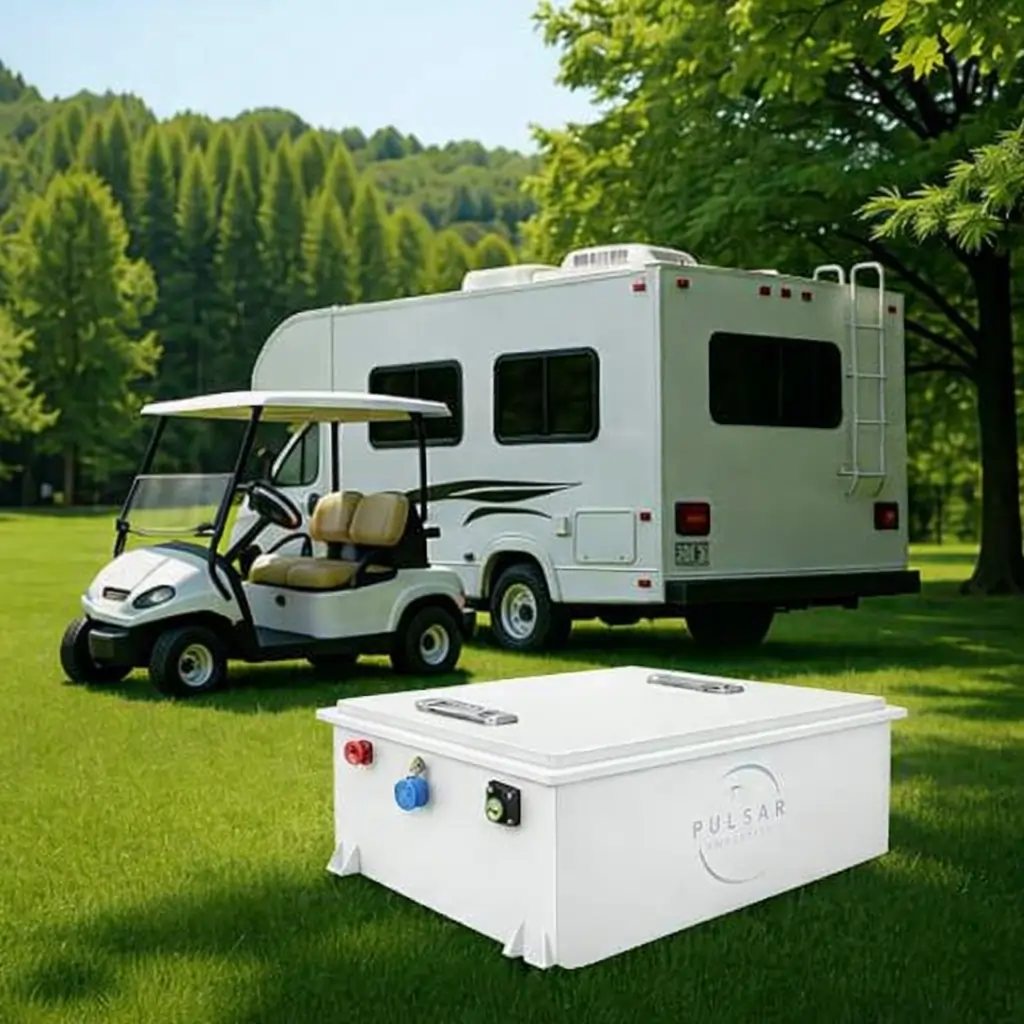
Lithium iron phosphate technology changes all of this. The chemistry is different, the operating profile is different, and the ownership experience is different in ways that matter every time the battery is used. Pulsar Industries offers LiFePO4 battery packs in the standard voltage and capacity configurations used in golf carts and RVs as direct drop-in replacements — no modification to the vehicle or charging infrastructure required in most applications.
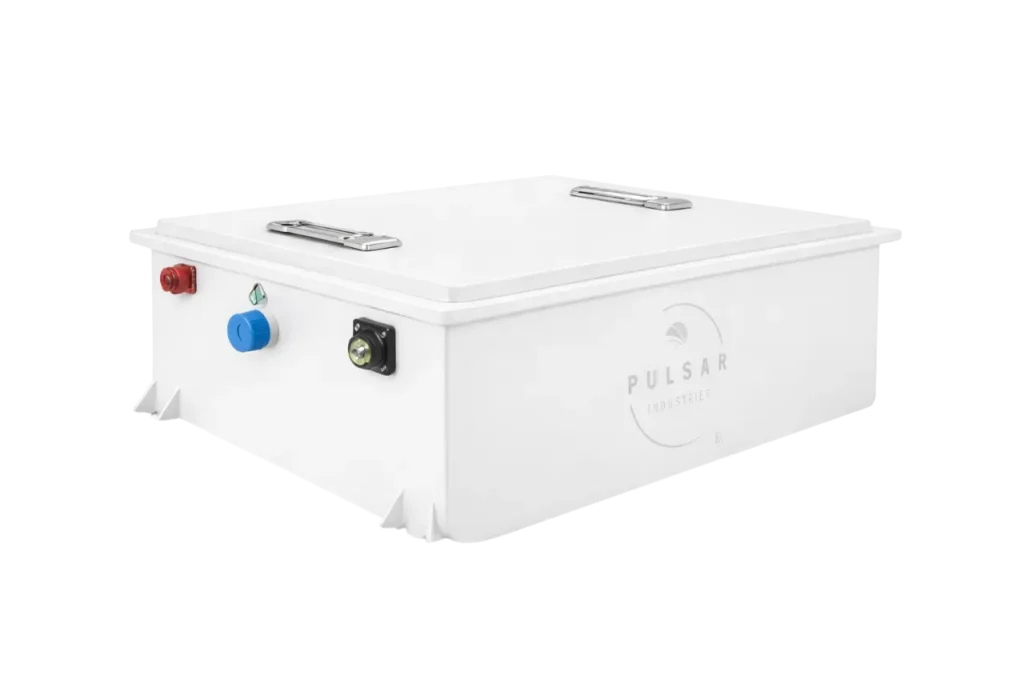
Technical Features
- Chemistry: LiFePO4 — safest lithium chemistry, no thermal runaway risk
- Cycle Life: 6,000+ at 0.5C charge rate, 25°C ambient, 80% depth of discharge
- Design Life: 15 years under normal operating conditions
- Protection Rating: IP65 — dust-tight and protected against water jets
- BMS Protection: Overcharge, over-discharge, over-temperature, short circuit
- State of Charge Display: Integrated LED indicator
- Monitoring: Bluetooth connectivity with mobile app (removable on request)
- Construction: Sealed, maintenance-free enclosure
AVAILABLE CONFIGURATIONS
Voltage and Capacity Options
- 12V 100Ah — 1.28 kWh capacity (308 x 175 x 220 mm)
- 12V 200Ah — 2.56 kWh capacity (460 x 220 x 212 mm)
- 12V 400Ah — 5.12 kWh capacity (460 x 320 x 247 mm)
- 24V 100Ah — 2.56 kWh capacity (460 x 220 x 212 mm)
- 24V 200Ah — 5.12 kWh capacity (460 x 320 x 247 mm)
- 48V 100Ah — 5.12 kWh capacity (460 x 320 x 247 mm)
WHY LIFEPO4
Why LiFePO4 is the Right Choice for Golf Carts and RVs
Consistent Power All Day Long
Lead-acid batteries deliver their full rated voltage when the pack is fully charged, but voltage drops progressively as the pack discharges. This voltage sag translates directly into reduced motor performance — the cart gets slower, less responsive, and more sluggish as the day progresses. By the 16th hole, the difference is noticeable.
LiFePO4 batteries maintain near-constant voltage from approximately 90% state of charge down to about 20%. The power delivery characteristics are virtually identical at the beginning and end of the discharge cycle. The cart performs the same on the first hole as on the 18th. For RV applications, this means appliances and lights operate at consistent voltage rather than degrading as the house batteries deplete.
Six Times the Cycle Life
A quality lead-acid battery in a golf cart typically delivers 500 to 800 full charge-discharge cycles before capacity loss becomes significant enough to shorten the range noticeably. At two rounds per day for five days a week, that represents roughly one to two years of reliable service before the first replacement. LiFePO4 batteries are rated for 6,000-plus cycles at 80% depth of discharge — six to twelve times the cycle life. At the same usage rate, that represents more than ten years of reliable service from a single set of batteries.
Over a fifteen-year ownership period, the economics of LiFePO4 are compelling even against lower initial purchase prices. The lead-acid batteries get replaced multiple times. The LiFePO4 battery runs for the full ownership period.
Fast, Simple Charging
Lead-acid batteries require careful multi-stage charging — bulk, absorption, and float phases that take hours to complete properly. High-rate charging damages lead-acid cells and accelerates sulfation. LiFePO4 batteries accept higher charge rates without damage, meaning a significantly shorter time to full charge. For commercial golf cart operations that run two or more shifts per day, the ability to quick-charge between rounds has direct operational value.
Zero Maintenance
Lead-acid batteries require monthly water level checks and periodic topping with distilled water — and a cell that runs dry even briefly suffers permanent capacity loss. They require terminal cleaning to prevent corrosion. They require specific storage protocols to prevent deep discharge during extended non-use periods. LiFePO4 batteries require none of this. Install the battery, use it, and store it — the integrated battery management system handles all cell-level protection and balancing automatically.
Thermal Safety
LiFePO4 is the safest lithium chemistry available. Unlike NMC and other lithium chemistries that can enter thermal runaway under abuse conditions, LFP is thermally stable even under overcharge, over-discharge, and physical damage scenarios. This safety profile makes LFP appropriate for unattended storage and charging in enclosed spaces such as cart barns and RV garages.
FAQ
Frequently Asked Question
Do I need a new charger when I switch from lead-acid to LiFePO4?
LiFePO4 batteries have a different charging voltage and profile than lead-acid. Many modern smart chargers have a lithium mode that works correctly. However, a standard lead-acid charger will not charge a LiFePO4 battery properly and may reduce its lifespan. We recommend verifying charger compatibility and, if necessary, upgrading to a charger with a lithium battery mode before installation.
Can I replace only some of the batteries in my cart?
No — mixing LiFePO4 and lead-acid batteries in the same bank is not recommended and can cause performance problems and reduce lifespan for both types. Replace the complete bank at the same time for best results.
What happens when the battery gets very cold?
LFP batteries charge at reduced rates below 0°C to protect cell integrity — the BMS manages this automatically. Discharge performance is maintained over a wider temperature range than lead-acid. For RV or cart applications in cold climates, consult us about the appropriate configuration for your expected operating temperatures.