
Energy Storage
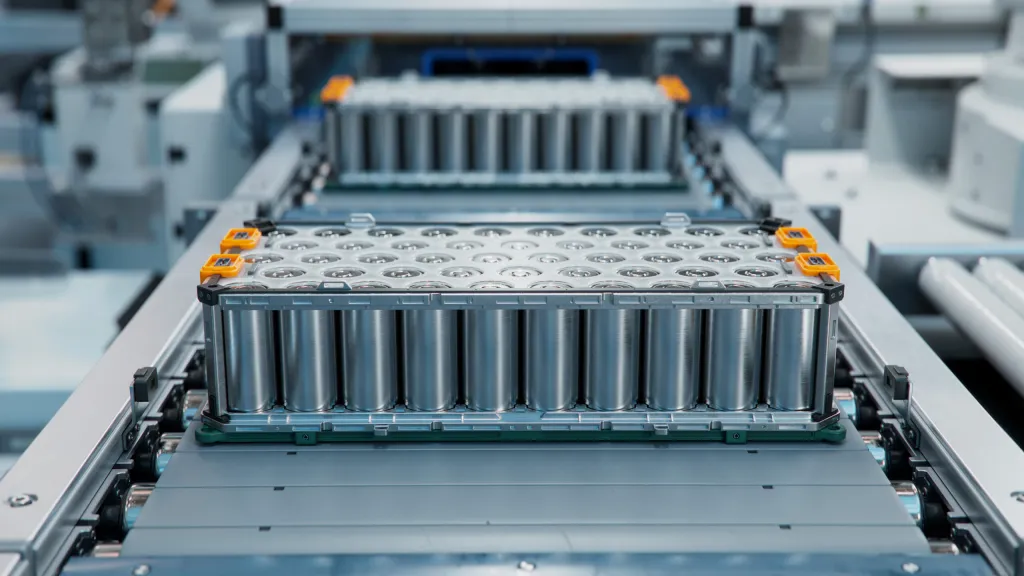
Energy Storage Is an Engineered System, Not a Commodity Product
A lithium cell is a commodity. Energy storage systems are not. The performance, safety, and longevity of an energy storage system depend on how the cells are arranged, how the thermal environment is managed, how the battery management system monitors and controls the pack, how the enclosure protects the system in its operating environment, and how the entire system integrates with the electrical infrastructure around it. Getting those engineering decisions right — for a specific application, a specific environment, and a specific regulatory context — is the work that Pulsar Industries does.
We design and manufacture energy storage systems across a wide range of applications, from portable home backup to commercial peak-shaving installations, from construction site temporary power to critical infrastructure support. In every case, we start from your specific requirements — not from a standard product that is close enough to your needs but not exactly right.
TECHNOLOGIES
Battery Technologies We Work With
Lithium Iron Phosphate (LFP / LiFePO4) — Our Primary Chemistry
For stationary and semi-mobile energy storage, LFP is the chemistry we recommend in the large majority of cases. The reasons are quantitative: LFP delivers 6,000 or more full charge-discharge cycles before reaching 80% of original capacity, compared to 2,000–3,000 cycles for NMC. LFP has no thermal runaway risk under normal abuse conditions — unlike NMC, which can self-heat and propagate failure if it is overcharged, deeply discharged, or damaged. LFP handles partial states of charge well, which is important for applications like solar storage where the battery is not always cycled to full depth. And LFP’s declining cost has made it competitive on a total cost of ownership basis even against lower upfront-cost alternatives.
For data centers, telecom infrastructure, commercial building backup, residential solar storage, and industrial applications where a battery will cycle daily for ten or more years, LFP is typically the right choice. The combination of safety, longevity, and improving economics is compelling.
Lithium-Ion (NMC / NCA) — Where Energy Density Matters
NMC and NCA chemistries deliver meaningfully higher energy density than LFP — roughly 50% more energy in the same weight and volume. For applications where size and weight constraints are severe and the trade-offs in cycle life and thermal management complexity are acceptable, NMC is the right choice. Electric vehicles, e-bikes, portable electronics, and certain mobile industrial equipment fall into this category.
We design NMC systems where the application genuinely requires the higher energy density, and we are transparent about the trade-offs: more complex thermal management required, lower cycle life, higher risk profile in thermal events. These are not reasons to never use NMC — they are reasons to use it deliberately and design around its characteristics.
Technology-Agnostic Approach
We do not have a preferred cell supplier that we favor regardless of the application. We evaluate each project based on its actual requirements and select the chemistry and supplier that best fits those requirements. In practice, this means most of our stationary storage work uses LFP, most of our mobile work uses LFP or NMC depending on weight constraints, and we occasionally encounter applications where less common chemistries like LTO (lithium titanate, excellent for extreme cold and ultra-high charge rates) or emerging solid-state variants are the right answer.
Regulatory Compliance
Strategic Planning
Technology Roadmapping
Project Management
Target Costing
Market Insights
APPLICATIONS
Applications We Serve
- Commercial building backup power and demand peak shaving
- Industrial uninterruptible power systems for manufacturing operations
- Residential off-grid and solar-plus-storage systems
- Construction site temporary power stations (PulseTrek product line)
- Emergency response and disaster recovery power
- Telecommunications tower backup power
- Data center backup power systems
- Agricultural operations and rural facilities with limited grid access
- Mining equipment electrification
- EV charging infrastructure storage
MANUFACTURING PROCESS
How We Build Energy Storage Systems
Component Qualification
Every incoming lot of lithium cells is tested before it enters production. We measure capacity, impedance, and self-discharge rate on a sample from each lot. This is not a formality — lithium cell production has lot-to-lot variability that can affect system performance and long-term balance behavior. Catching out-of-specification cells before they are assembled into modules prevents warranty claims and field performance issues.
Module Assembly and BMS Integration
Cells are matched for capacity and impedance before module assembly. Module assembly follows documented work instructions with in-process checks. BMS hardware is installed and initialized, communication interfaces are verified, and protection thresholds are confirmed against the specification.
System Test
Every completed energy storage system goes through a system-level functional test that charges and discharges the pack through its full operating range, verifies BMS protection functions, confirms communication interface operation, and measures thermal behavior under a representative load profile. Test data is recorded and archived for each unit.
FAQ
Frequently Asked Question
How do your energy storage systems differ from off-the-shelf products?
Yes. The line-to-line 480V output is compatible with both 480V wye and 480V delta electrical services. No neutral conductor is required in either case.
How does panel-level monitoring work?
Each MultiNode 6 unit reports production data individually through the trunk cable communication system. The monitoring application provides real-time per-panel production data, historical production analysis, and fault identification — giving commercial solar operators granular visibility into system performance without additional monitoring equipment.
What is the installation time per panel compared to a string inverter system?
Microinverter installation eliminates DC string wiring, combiner boxes, and central inverter mounting and connection work. For typical commercial rooftop systems, total installation labor is comparable to string inverter systems, with the advantage that panel-level wiring is simpler and safer because DC voltages are kept below 60V throughout.