
Battery Energy Storage Systems (BESS): Powering a More Reliable and Flexible Energy Future
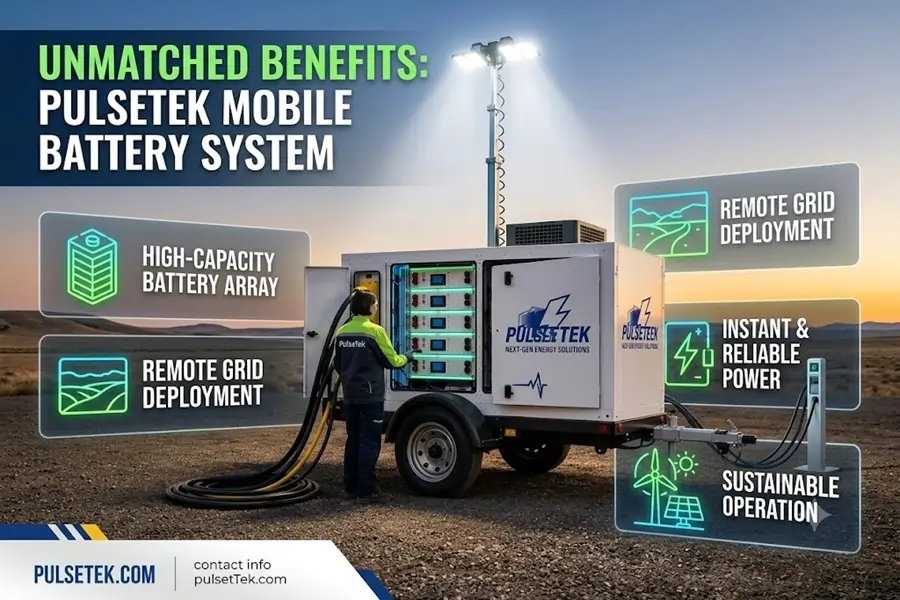
The way businesses generate, store, and consume electricity is changing rapidly. Renewable energy, electrification, distributed power generation, and the growing need for energy resilience are creating demand for smarter ways to manage electricity.
One technology at the center of this transformation is the Battery Energy Storage System (BESS).
Battery energy storage allows businesses, industrial facilities, utilities, renewable energy developers, and other organizations to store electricity and use it when it delivers the greatest value. From reducing peak demand and supporting solar installations to providing backup power and stabilizing electrical systems, BESS is becoming an important part of modern energy infrastructure.
At Pulsar Industries, we approach energy storage as an engineered system rather than simply a collection of batteries. Battery chemistry, system architecture, thermal management, Battery Management Systems (BMS), power electronics, controls, enclosures, and application requirements must work together to create a reliable energy storage solution.
What Is a Battery Energy Storage System?
A Battery Energy Storage System is an integrated system designed to store electrical energy in rechargeable batteries and release that energy when required.
A typical BESS can include:
- Battery cells and modules
- Battery racks or packs
- Battery Management System (BMS)
- Power Conversion System (PCS) or inverter
- Energy Management System (EMS)
- Thermal management equipment
- Electrical protection systems
- Monitoring and communication systems
- Safety equipment
- Weather-resistant or containerized enclosures
Together, these components allow the system to safely control how electricity is stored, monitored, managed, and delivered.
Depending on the application, battery storage systems can range from relatively compact portable systems to large commercial, industrial, and containerized energy storage installations.
How Does a Battery Energy Storage System Work?
The basic operating principle of a BESS is straightforward.
1. Energy Is Generated or Purchased
Electricity may come from the utility grid, solar panels, wind generation, generators, or another energy source.
2. Electricity Is Stored
When electricity is available or economical to store, the BESS charges its battery modules.
For a solar installation, for example, excess solar generation produced during the day can be stored instead of being immediately exported or left unused.
3. The System Continuously Monitors the Battery
The Battery Management System monitors important operating parameters such as battery voltage, current, temperature, state of charge, and other conditions.
The Energy Management System can determine when the system should charge or discharge based on load requirements, electricity rates, renewable generation, operating priorities, or grid conditions.
4. Stored Energy Is Delivered When Required
When electricity demand increases, utility power becomes expensive, renewable generation decreases, or grid power becomes unavailable, stored energy can be converted back into usable AC electricity and supplied to connected loads.
This ability to shift electricity across time is one of the primary advantages of battery energy storage.
Why Battery Energy Storage Is Becoming More Important
Traditional electrical systems largely operate around producing electricity at the same time it is consumed.
Renewable resources such as solar and wind introduce a different challenge because generation does not always occur at the same time as demand.
Solar panels may produce their highest output during the middle of the day while a facility’s electricity demand may remain high later in the afternoon or evening.
Battery storage helps bridge that gap.
Instead of treating electricity as something that must always be consumed immediately, BESS gives organizations greater control over when energy is used.
This flexibility can improve energy resilience, increase renewable energy utilization, reduce peak demand, and provide greater control over operating costs.
Key Benefits of Battery Energy Storage Systems
Peak Shaving and Demand Management
Commercial and industrial facilities can experience significant increases in electricity demand during certain periods.
A properly designed BESS can discharge during these high-demand periods, reducing the amount of electricity that must be drawn from the utility grid.
This strategy, commonly called peak shaving, can help facilities better manage their electrical demand and potentially reduce demand-related electricity costs.
Renewable Energy Integration
Solar and wind power are inherently variable.
Battery storage makes renewable energy more flexible by capturing excess generation and making it available later.
A solar-plus-storage installation, for example, can store excess daytime solar energy and deliver it during evening hours or other periods when solar production is low.
Backup Power and Energy Resilience
Unexpected grid interruptions can cause costly downtime for businesses and industrial operations.
Depending on system configuration and load requirements, battery storage can provide power to designated loads when normal grid power is interrupted.
This can be particularly valuable for facilities where continuity, safety, communications, monitoring, or essential operations are critical.
Load Shifting
Electricity prices may vary throughout the day.
Energy storage can allow electricity to be stored during lower-cost periods and used during higher-cost periods where the applicable utility rate structure makes this strategy beneficial.
This process is commonly known as load shifting or energy arbitrage.
Reduced Dependence on Conventional Generators
Diesel generators have traditionally been used for temporary and backup power.
Battery energy storage can provide a silent, locally emission-free source of stored electrical power and, in some applications, can reduce generator runtime.
Battery systems can also be integrated into hybrid power architectures where batteries, generators, solar, and the utility grid work together.
Fast Power Response
Battery systems can respond quickly to changing electrical conditions.
That makes properly engineered BESS solutions useful for applications requiring rapid power delivery, load balancing, renewable smoothing, and other power-management functions.
Why LFP Batteries Are Well Suited for Energy Storage
Battery chemistry is one of the most important engineering decisions in any energy storage project.
For many stationary and semi-mobile energy storage applications, Lithium Iron Phosphate (LiFePO4 or LFP) offers an attractive combination of cycle life, thermal stability, safety, and performance.
LFP batteries are particularly well suited for applications where batteries may charge and discharge frequently over many years.
Advantages can include:
- Long cycle life
- Strong thermal stability
- Good performance under frequent cycling
- Low maintenance requirements
- High round-trip efficiency
- Suitable characteristics for stationary storage
- Reliable operation across a wide range of applications
Selecting battery chemistry, however, should always depend on the specific operating requirements of the project rather than simply selecting a battery based on capacity.
The Importance of Battery Management Systems
The batteries may store the energy, but the Battery Management System (BMS) plays a critical role in controlling and protecting the battery system.
A BMS can continuously monitor individual cells, modules, or battery packs and track parameters including:
- Cell voltage
- Pack voltage
- Current
- Temperature
- State of Charge (SOC)
- State of Health (SOH)
- Charging conditions
- Discharging conditions
A properly engineered BMS can also help protect the system against conditions such as overcharging, excessive discharge, abnormal temperatures, and electrical faults.
For larger battery systems, communication between the BMS, inverter, EMS, and other control systems becomes an important part of overall system engineering.
BESS for Commercial and Industrial Facilities
Commercial and industrial facilities are among the strongest applications for battery energy storage.
Manufacturing plants, warehouses, commercial buildings, logistics facilities, data infrastructure, and other high-demand operations can experience large and rapidly changing electrical loads.
BESS can support these facilities through applications such as:
- Peak demand management
- Backup power
- Load shifting
- Solar energy storage
- Microgrid operation
- Renewable integration
- Power resilience
- EV charging support
The appropriate system capacity depends on much more than the facility’s monthly electricity consumption.
Engineers must understand the facility’s actual load profile, peak power requirements, required backup duration, operating environment, electrical infrastructure, and future expansion plans.
Battery Storage for Solar Energy
Solar and battery storage are naturally complementary technologies.
Solar generation is highest when sunlight is available, but electricity demand does not necessarily follow the same schedule.
A solar + BESS system can store excess solar electricity and make it available later.
During the day:
Solar Panels → Facility Loads → Battery Charging
When solar production decreases:
Battery Storage → Facility Loads
Depending on system architecture, utility grid power can also interact with both the loads and battery storage.
This approach can increase on-site utilization of renewable energy while giving facility operators greater flexibility over when solar-generated electricity is consumed.
BESS for EV Charging Infrastructure
High-power EV charging can create substantial electrical demand, particularly when several vehicles charge simultaneously.
Battery energy storage can be incorporated into EV charging infrastructure to help manage these power requirements.
A battery system may charge gradually from the grid or renewable generation and then provide additional power during periods of high EV charging demand.
Potential applications include:
- Commercial EV charging stations
- Fleet charging facilities
- Logistics centers
- Workplace charging
- Construction fleets
- Remote charging locations
Battery-supported charging can be especially valuable where available grid capacity is limited or expensive to upgrade.
Containerized Battery Energy Storage Systems
Large commercial, industrial, microgrid, and utility applications may require significantly greater storage capacity.
For these projects, containerized BESS solutions can provide a practical modular architecture.
A containerized system can integrate battery racks, thermal management, controls, electrical protection, monitoring systems, power electronics, and other components into a purpose-designed enclosure.
Benefits of containerized BESS can include:
- Modular deployment
- High storage capacity
- Simplified site integration
- Expandable architecture
- Centralized thermal management
- Integrated monitoring
- Suitable design for outdoor installations
Additional containers or battery blocks can potentially be incorporated as project requirements grow, depending on the system architecture.
Grid-Scale Energy Storage
Battery energy storage is also becoming increasingly important for larger electrical grids.
Grid-scale systems can store substantial amounts of electricity and respond quickly when power conditions change.
Potential grid applications include:
- Frequency regulation
- Peak load management
- Renewable energy integration
- Energy shifting
- Microgrid support
- Grid stabilization
- Capacity support
As renewable generation expands, energy storage can provide an important layer of flexibility between variable generation and changing electricity demand.
BESS for Microgrids and Off-Grid Applications
Battery storage can serve as the central energy buffer within a microgrid.
A microgrid may combine:
Solar + Wind + Grid + Generator + Battery Storage + Intelligent Controls
Instead of relying on a single source of electricity, the control system can coordinate multiple sources based on availability, demand, cost, and operational priorities.
For remote or off-grid installations, battery storage can capture renewable generation and provide electricity when renewable resources are temporarily unavailable.
Choosing the Right Battery Energy Storage System
There is no single BESS configuration that is ideal for every project.
Before designing a system, several questions should be answered.
How Much Energy Is Required?
Battery energy capacity is generally measured in kilowatt-hours (kWh) or megawatt-hours (MWh).
This determines how much energy the system can store.
How Much Power Is Required?
Power is measured in kilowatts (kW) or megawatts (MW).
A facility may require a large amount of power for a relatively short period or a smaller amount of power for several hours. These scenarios require different system designs.
What Is the Load Profile?
Understanding when and how electricity is consumed is essential for proper system sizing.
What Is the Primary Application?
A system designed primarily for peak shaving may have different requirements than one designed for backup power, renewable integration, or EV charging.
What Is the Operating Environment?
Temperature, humidity, dust, weather exposure, vibration, installation location, and other environmental conditions influence enclosure, thermal management, and system design.
Will Future Expansion Be Required?
A modular architecture can make it easier to increase energy capacity as a facility’s requirements grow.
Why BESS Should Be Engineered as a Complete System
Battery capacity alone does not determine whether an energy storage project will succeed.
A reliable BESS requires multiple engineering disciplines to work together:
Battery Cells + Mechanical Design + Thermal Management + BMS + Power Electronics + EMS + Electrical Protection + Software + Enclosure = Complete Energy Storage System
Poor thermal management can shorten battery life.
Incorrect system sizing can increase project cost without delivering proportional value.
Weak BMS integration can affect reliability.
Improper power electronics selection can limit system performance.
This is why energy storage should be approached as an integrated engineering project rather than simply purchasing batteries based on their kWh rating.
Pulsar Industries’ Approach to Battery Energy Storage
Pulsar Industries provides battery engineering and manufacturing capabilities for energy storage applications.
Our approach begins with understanding the customer’s actual operating requirements before determining the appropriate system architecture.
Depending on the project, this process can include:
- Application and load analysis
- Battery chemistry selection
- Cell and module engineering
- BMS development and integration
- Thermal management engineering
- Mechanical and structural design
- Power electronics integration
- Prototype development
- Testing and validation
- Manufacturing planning
- In-house battery system production
This end-to-end approach helps ensure that the battery system is designed around the real-world application rather than forcing the application to fit an existing battery product.
The Future of Battery Energy Storage
Battery storage will continue to play an increasingly important role as electricity generation becomes more distributed and renewable energy adoption grows.
Businesses and utilities are moving toward energy systems that are more flexible, intelligent, and resilient.
The next generation of BESS technology will increasingly combine advanced battery chemistry with sophisticated BMS, EMS, remote monitoring, renewable generation, intelligent power conversion, and automated energy optimization.
For businesses, this means energy storage is becoming more than backup power.
It is becoming a tool for energy management, resilience, electrification, renewable integration, and long-term infrastructure planning.
Build the Right Energy Storage System for Your Application
Every energy storage project has different requirements.
A manufacturing facility looking to reduce peak demand has different requirements from a solar farm, EV charging site, commercial building, construction operation, or microgrid.
That is why successful battery energy storage starts with engineering.
Pulsar Industries designs, engineers, prototypes, and manufactures battery systems based on real-world application requirements.
Whether your project requires commercial battery storage, industrial energy storage, renewable integration, mobile power, or a custom battery system, our engineering team can help develop a solution designed around your performance and operational requirements.
Contact Pulsar Industries to discuss your Battery Energy Storage System project.

1 thought on “Battery Energy Storage System – BESS”