In today’s competitive business environment, reliable electricity is essential for maintaining productivity, protecting equipment, and ensuring uninterrupted operations. Whether it is a manufacturing facility, commercial building, data center, or industrial warehouse, even a short power interruption can create significant operational and financial challenges.
Unexpected electricity outages can stop production lines, interrupt critical business processes, damage sensitive equipment, and delay customer deliveries. For businesses that depend heavily on continuous power, these interruptions can quickly translate into lost revenue and increased operating expenses.
This is where Battery Energy Storage Systems (BESS) are changing the way businesses manage electricity.
By storing electrical energy and making it available when needed, modern battery storage solutions can help organizations strengthen power reliability, improve operational flexibility, and reduce dependence on traditional backup power infrastructure.

Understanding the Real Cost of Power Interruptions
Power interruptions affect businesses in different ways depending on their industry, operating processes, and electrical requirements.
For a manufacturing company, an unexpected outage may stop automated machinery and disrupt production schedules. In a commercial facility, it can interrupt essential services, communication systems, and business operations.
The financial impact often extends beyond the duration of the outage itself.
Businesses may experience:
- Production Losses: Manufacturing equipment stops operating, resulting in missed production targets and delayed orders.
- Equipment Damage: Sudden shutdowns or unstable power conditions may affect sensitive electrical equipment.
- Operational Delays: Employees and equipment remain idle until electricity is restored and operations restart.
- Data and Communication Disruptions: IT infrastructure, servers, and networking systems may become unavailable.
- Product Quality Issues: Temperature-sensitive goods and automated processes may be affected by interruptions.
- Additional Recovery Expenses: Restarting equipment, inspecting systems, and restoring operations can increase costs.
For organizations with continuous production requirements, reliable electricity is not simply a convenience. It is a fundamental business necessity.
What Is a Battery Energy Storage System?
A Battery Energy Storage System is an integrated technology that stores electricity in rechargeable batteries and delivers it when required.
Unlike conventional generators, which produce electricity by consuming fuel, battery storage systems retain energy supplied by the electrical grid, solar panels, or other compatible power sources.
A typical commercial or industrial BESS includes:
- Battery Modules: Store electrical energy for later use.
- Battery Management System (BMS): Monitors battery conditions and helps maintain safe operation.
- Power Conversion System (PCS): Converts electricity between AC and DC as required.
- Energy Management System (EMS): Coordinates charging, discharging, and power distribution.
- Thermal Management System: Helps maintain appropriate battery operating temperatures.
- Protection and Control Equipment: Supports electrical safety and system reliability.
Together, these components create an intelligent energy storage solution capable of responding to changing electricity requirements.
How Battery Energy Storage Systems Help Prevent Business Downtime
1. Providing Backup Power During Grid Outages
One of the most valuable applications of battery energy storage is supporting critical business operations when utility electricity becomes unavailable.
A properly designed BESS can supply stored electricity to selected equipment during a grid interruption.
For example, an industrial facility may configure battery storage to support essential control systems, communication equipment, emergency infrastructure, and designated production loads.
The backup duration depends on available battery capacity, connected electrical demand, system efficiency, and operating conditions.
Importantly, not every BESS automatically provides uninterrupted backup power. The installation must include suitable controls, switching equipment, and islanding capability. Applications requiring no-break power may also need a UPS or equivalent architecture.
2. Protecting Critical Industrial Equipment
Industrial facilities often operate sophisticated equipment that depends on stable electrical conditions.
Unexpected power loss can interrupt automated processes, stop machinery, and create additional work during equipment restarts.
Battery energy storage can be integrated into a facility’s electrical infrastructure to support critical loads and coordinate backup operations.
When combined with appropriate power conditioning and control systems, energy storage can contribute to a more resilient electrical setup.
This is particularly valuable for facilities where restarting machinery is expensive or time-consuming.
3. Reducing Dependence on Diesel Generators
Diesel generators have traditionally been used to provide backup electricity for commercial and industrial facilities.
Although generators remain important for many applications, they require fuel, regular maintenance, and appropriate ventilation.
Battery energy storage offers a different approach.
A BESS can provide electricity without combustion at the point of use, reducing local exhaust emissions and operating noise during discharge.
In hybrid installations, battery systems can work alongside generators to support short-duration loads and reduce unnecessary generator operation.
For extended outages, generators or other charging sources may still be required because battery storage has a finite energy capacity.
4. Supporting Continuous Business Operations
Many businesses operate equipment that cannot be shut down without consequences.
Data centers, healthcare facilities, manufacturing plants, logistics centers, and commercial infrastructure may require carefully planned backup electricity arrangements.
Battery storage can support selected essential systems during utility interruptions, depending on the installation design.
For example, a logistics warehouse may prioritize security systems, communication equipment, and critical automation controls.
A manufacturing facility may prioritize production control equipment and safe shutdown processes.
By identifying essential loads, businesses can design energy storage systems around their operational priorities.
5. Improving Energy Management During Peak Demand
Battery energy storage provides benefits beyond emergency backup.
Many commercial and industrial facilities experience fluctuating electricity consumption throughout the day.
When several high-power machines operate simultaneously, the facility’s electricity demand may increase significantly.
A BESS can discharge during selected high-demand periods to reduce electricity drawn from the grid.
This strategy, known as peak shaving, may help lower demand-related electricity charges where applicable tariffs support such savings.
The financial benefit depends on electricity pricing, load patterns, battery efficiency, and the system’s operating strategy.
Businesses can also reserve a portion of battery capacity for emergency backup while using the remaining available capacity for energy management, subject to system design.
Industries That Benefit from Battery Energy Storage Systems
Battery storage technology can support a wide range of commercial and industrial applications.
| Industry | Potential BESS Application |
|---|---|
| Manufacturing | Supporting critical machinery and production controls |
| Data Centers | Backup power integration and energy management |
| Healthcare | Supporting designated critical electrical infrastructure |
| Warehousing | Power support for automation and essential operations |
| Commercial Buildings | Backup power and peak demand management |
| Cold Storage | Supporting critical refrigeration and monitoring loads |
| Renewable Energy Projects | Solar integration and energy shifting |
| Telecommunications | Backup power for network equipment |
Each industry has different reliability requirements, making application-specific system engineering essential.
Battery Energy Storage vs. Traditional Backup Power
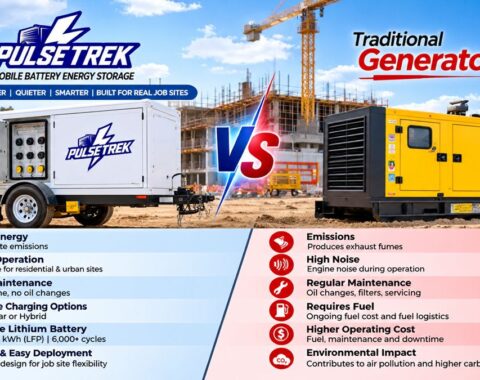
Businesses evaluating backup electricity options should understand the differences between battery storage and conventional generators.
| Feature | Battery Energy Storage System | Diesel Generator |
|---|---|---|
| Energy Source | Previously stored electricity | Diesel fuel |
| Operating Noise | Generally low | Engine noise |
| Local Exhaust Emissions | None during discharge | Produces exhaust |
| Energy Availability | Limited by stored capacity | Limited by fuel availability |
| Maintenance | Battery and electrical system maintenance | Engine and electrical maintenance |
| Response Time | Depends on system configuration | Depends on starting and transfer system |
| Solar Integration | Supported by suitable designs | Requires additional integration |
Battery storage and diesel generators are not always competing technologies.
For some facilities, a hybrid solution combining both technologies may offer greater flexibility and longer backup capability.
How to Choose the Right Battery Energy Storage System for Your Business
Selecting the right BESS requires a detailed understanding of business operations and electrical infrastructure.
Evaluate Your Critical Power Requirements
Identify the equipment that must remain operational during a power interruption.
This helps determine the required inverter power rating and electrical distribution design.
Determine the Required Backup Duration
Estimate how long essential equipment needs to operate without utility electricity.
For example, a critical load averaging 50 kW over two hours requires approximately 100 kWh of delivered energy before system losses and reserve allowances.
Consider Battery Technology
Battery chemistry influences performance, safety characteristics, energy density, and operating life.
Lithium Iron Phosphate (LFP) batteries are commonly used in commercial and industrial energy storage applications.
Review Safety and Monitoring Features
Evaluate battery management, thermal controls, electrical protection, monitoring capabilities, and applicable safety certifications.
Plan for Future Expansion
Businesses expecting increased electricity demand should consider whether the selected energy storage architecture supports future capacity expansion.
A scalable design can help accommodate changing operational requirements.
The Role of Intelligent Energy Management
Modern battery energy storage systems can use intelligent control technology to coordinate electricity consumption, battery charging, and backup reserves.
An Energy Management System may monitor:
- Real-time electricity demand
- Battery state of charge
- Available backup energy
- Electricity pricing periods
- Solar power generation
- Charging and discharging schedules
- System alarms and operating conditions
These capabilities help businesses use stored energy according to operational priorities.
For example, a facility may maintain a minimum battery reserve for unexpected outages while using additional capacity to manage electricity demand.
The appropriate control strategy depends on the organization’s reliability objectives and energy costs.
Why Businesses Are Investing in Energy Resilience
Electricity reliability is becoming an increasingly important part of business continuity planning.
Industrial automation, digital infrastructure, and electrically powered equipment have increased the operational consequences of unexpected outages.
At the same time, businesses are exploring renewable energy integration, improved electricity management, and reduced reliance on fuel-based equipment.
Battery energy storage offers a flexible technology that can address several of these requirements within a single engineered system.
However, successful implementation requires realistic load assessment, appropriate equipment selection, and a clear understanding of operating limitations.
Advanced Battery Energy Storage Solutions from Pulsar Industries
Pulsar Industries develops battery energy storage technologies for commercial, industrial, and specialized power applications.
Its energy storage solutions bring together battery technology, power conversion equipment, intelligent controls, and application-focused engineering.
For businesses exploring improved energy reliability, a properly configured battery storage system can form an important part of a broader power continuity strategy.
Pulsar Industries focuses on engineered energy storage solutions designed around different operating environments and electrical requirements.
Whether the objective is backup power support, energy optimization, or renewable energy integration, choosing the right system begins with understanding the application.
Conclusion
Unexpected power interruptions can create significant financial and operational challenges for modern businesses.
From manufacturing downtime and equipment disruptions to delayed services and recovery expenses, unreliable electricity can affect productivity and business continuity.
Battery Energy Storage Systems offer a practical way to strengthen energy resilience by providing stored electricity for critical applications, supporting backup power infrastructure, and improving energy management.
When correctly designed and integrated, BESS technology can help organizations reduce the impact of outages, protect essential operations, and prepare for changing energy requirements.
As businesses continue to prioritize operational reliability, battery energy storage is becoming an increasingly valuable component of modern electrical infrastructure.