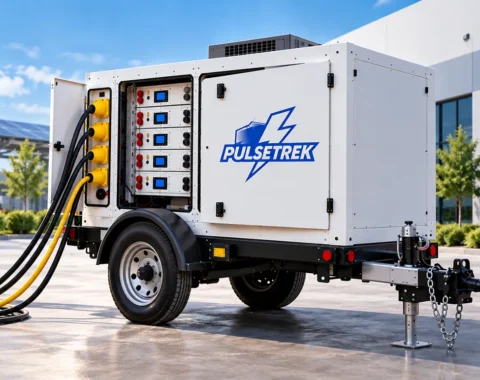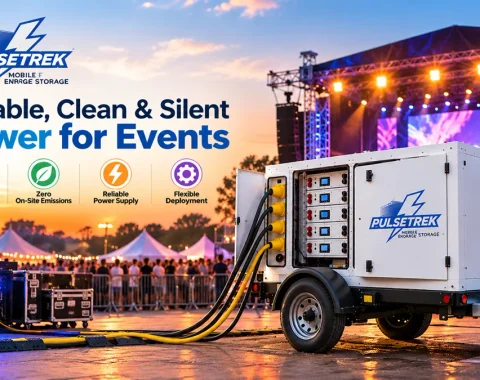
As energy costs continue to rise, businesses are looking for smarter ways to manage electricity consumption, reduce peak demand, and improve energy reliability. One of the most effective solutions is a Battery Energy Storage System (BESS).
Modern battery storage allows commercial and industrial facilities to store electricity when demand or energy prices are lower and use that stored power when it is needed most. This gives businesses greater control over their energy consumption while helping reduce dependence on the grid during peak periods.
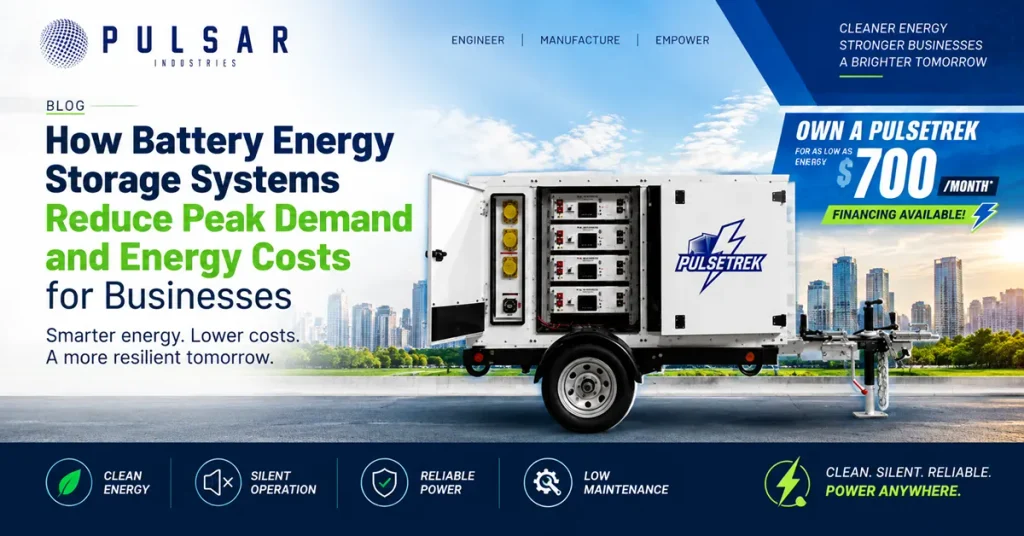
What Is a Battery Energy Storage System?
A Battery Energy Storage System stores electrical energy in rechargeable batteries for later use. Instead of relying entirely on electricity from the grid at the moment it is required, businesses can store energy and strategically discharge it according to operational needs.
BESS can support a wide range of applications, including:
- Peak demand management
- Load shifting
- Renewable energy integration
- Backup power
- Microgrid applications
- EV charging infrastructure
- Industrial energy management
- Grid support
For facilities with changing or high electrical loads, battery storage can become an important part of a more flexible energy strategy.
Understanding Peak Demand
Commercial and industrial electricity consumption is rarely constant throughout the day. Equipment startup, HVAC systems, manufacturing processes, EV charging, and other high-power operations can create periods of significantly higher demand.
These short periods of high electricity usage are commonly referred to as peak demand.
Depending on the utility rate structure, these demand peaks can contribute significantly to a facility’s overall electricity costs.
Battery storage provides businesses with an opportunity to manage these peaks rather than simply accepting them.
How BESS Helps Reduce Peak Demand
One of the most valuable BESS applications is peak shaving.
During periods of normal or lower demand, the battery system can be charged. When facility demand begins to rise, stored energy can be discharged to supplement grid power.
For example, instead of drawing the entire required load from the utility grid during a high-demand period, part of that energy can come from the battery.
This can help flatten the facility’s demand profile and reduce extreme load spikes.
Load Shifting for Smarter Energy Use
Battery storage can also enable load shifting.
When electricity pricing varies throughout the day, businesses may charge their battery system during lower-cost periods and discharge it during higher-cost periods.
This approach allows organizations to shift when they effectively consume grid electricity without necessarily changing when their equipment operates.
For energy-intensive businesses, this flexibility can become an important component of long-term energy cost management.
Supporting Solar and Renewable Energy
Renewable energy generation and battery storage can work together effectively.
Solar panels generate electricity primarily during daylight hours, but a facility’s highest energy demand may occur at another time.
A BESS can store surplus solar energy and make it available later when onsite generation decreases or facility demand increases.
This helps businesses make better use of locally generated renewable energy and can reduce unnecessary dependence on grid electricity.
Why LFP Battery Technology Matters
Lithium Iron Phosphate (LFP) battery technology has become an important option for stationary and industrial energy storage applications.
LFP chemistry is known for characteristics such as:
Long Cycle Life
Designed for applications involving frequent charging and discharging.
Thermal Stability
LFP chemistry offers strong thermal characteristics compared with several other lithium-ion chemistries.
Durability
Suitable for demanding commercial and industrial energy storage environments.
Low Maintenance Requirements
Modern battery systems can provide energy storage without the maintenance requirements associated with many traditional power technologies.
These characteristics make LFP technology particularly attractive for applications where reliability, operating life, and safety are major considerations.
BESS for EV Charging Infrastructure
The rapid growth of electric vehicles is creating another challenge for commercial facilities: providing substantial charging capacity without creating excessive grid demand.
Battery energy storage can help support EV charging infrastructure by supplying additional power during periods of high charging demand.
Potential applications include:
- Commercial EV fleets
- Delivery vehicles
- Warehouses
- Logistics facilities
- Construction equipment
- Workplace charging
- Remote charging locations
Battery-supported charging can provide organizations with greater flexibility when developing EV infrastructure, particularly where available grid capacity is limited.
Energy Storage for Industrial Operations
Industrial facilities require dependable energy to keep critical equipment and processes operating.
Battery storage can be designed to support applications such as manufacturing facilities, warehouses, commercial buildings, utilities, construction sites, telecom infrastructure, and other high-demand environments.
The right system depends on several factors, including:
- Facility load profile
- Required storage capacity
- Power requirements
- Operating environment
- Charging strategy
- Available grid infrastructure
- Renewable generation
- Future expansion plans
This is why energy storage should be engineered around the actual application rather than treated as a one-size-fits-all product.
The Importance of Proper BESS Engineering
Battery capacity alone does not determine the effectiveness of an energy storage system.
A complete BESS may involve battery modules, power conversion equipment, battery management systems, thermal management, controls, monitoring, safety systems, enclosures, and integration with existing electrical infrastructure.
Proper system engineering helps ensure these components operate together efficiently and reliably.
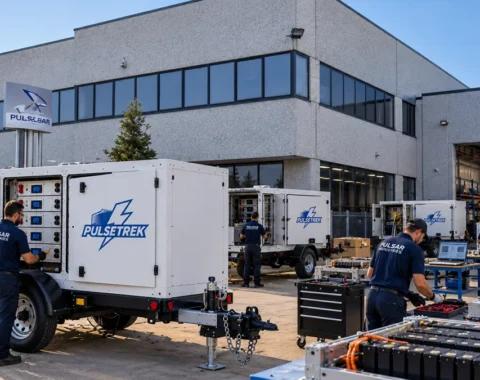
At Pulsar Industries, our experience in lithium battery engineering, manufacturing, and energy storage solutions helps us develop systems designed around real-world commercial and industrial requirements.
From application analysis and engineering to manufacturing and system integration, the objective is to create practical energy storage solutions for demanding applications.
Building a More Flexible Energy Future
Businesses are no longer limited to simply consuming electricity whenever it is supplied by the grid.
Battery Energy Storage Systems provide organizations with greater control over when energy is stored, when it is used, and how facility demand is managed.
Whether the objective is peak shaving, renewable energy integration, EV charging support, backup power, or improved energy resilience, BESS can become a valuable component of modern energy infrastructure.
As commercial and industrial energy requirements continue to evolve, intelligent battery storage will play an increasingly important role in creating more flexible, resilient, and efficient power systems.
Looking for a Battery Energy Storage Solution?
Pulsar Industries provides engineering, manufacturing, and energy storage expertise for commercial and industrial applications.
Explore our energy storage capabilities and discover how a properly engineered BESS can support your organization’s power requirements.