Reliable electricity is essential for successful outdoor events, exhibitions, concerts, festivals, and temporary installations. From lighting and audio equipment to digital displays and communication systems, event organizers need a dependable power supply.
Traditionally, diesel generators have been widely used for temporary electricity. However, businesses are increasingly exploring battery energy storage systems (BESS) as an alternative or complementary power source.
Modern mobile battery storage solutions can provide quiet operation, flexible deployment, and efficient electricity management for temporary applications.
What Is a Battery Energy Storage System for Events?
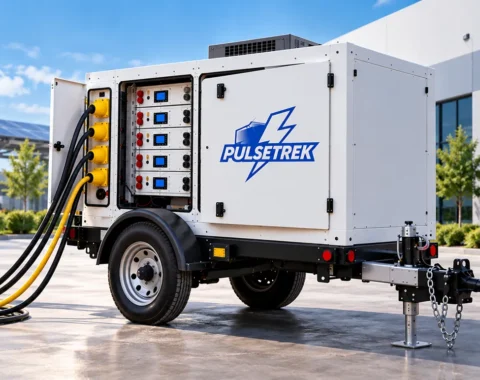
A battery energy storage system stores electrical energy and delivers it when required. For event applications, mobile or transportable battery systems can supply electricity to suitable connected equipment without continuously operating a fuel-powered generator.
Depending on their capacity and configuration, these systems may support lighting, sound systems, display screens, ticketing equipment, communication devices, and other event infrastructure.
Why Events Need Reliable Temporary Power Solutions
Temporary event venues may not have sufficient access to grid electricity. Even when a grid connection is available, additional power may be required for specific equipment.
Reliable temporary power helps organizers:
- Maintain uninterrupted event operations
- Support lighting and audiovisual equipment
- Reduce disruptive noise near visitors
- Supply electricity to remote installations
- Manage changing electricity requirements
- Improve operational flexibility
The power system must be selected according to peak load, total energy consumption, runtime, and equipment compatibility.
Benefits of Mobile Battery Energy Storage for Events
1. Quiet Power Operation
Unlike diesel generators, battery systems do not require a continuously running combustion engine to deliver electricity.
This makes them suitable for noise-sensitive environments such as corporate events, exhibitions, outdoor presentations, and temporary hospitality installations.
2. Reduced On-Site Exhaust Emissions
Battery systems produce no combustion exhaust at the point of electricity delivery.
Their overall environmental impact depends on manufacturing, charging sources, operating life, and end-of-life management.
3. Flexible Deployment
Transportable battery energy storage systems can be positioned near the equipment requiring electricity, subject to site access and safety requirements.
This flexibility is valuable for outdoor venues, construction-related events, and temporary commercial installations.
4. Efficient Energy Management
Battery systems can deliver stored electricity according to connected equipment demand.
When combined with suitable controls, they can also operate alongside other power sources to help manage changing loads.
5. Backup Power Support
A properly configured battery system can provide backup electricity for selected event equipment.
However, backup capability depends on system design, inverter capacity, transfer arrangements, and operating settings.
Battery Energy Storage vs Diesel Generators
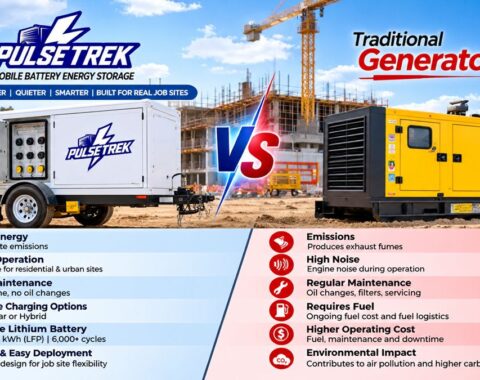
| Feature | Battery Energy Storage | Diesel Generator |
|---|---|---|
| Operating noise | Generally quieter | Engine noise |
| On-site exhaust | No combustion exhaust during discharge | Produces combustion exhaust |
| Refueling | Requires electrical recharging | Requires diesel |
| Runtime | Limited by usable stored energy | Depends on fuel availability |
| Maintenance | No combustion engine servicing | Engine and fuel-system maintenance |
| Deployment | Depends on battery system configuration | Depends on generator size and configuration |
Both technologies have suitable applications.
Diesel generators may be useful for extended operations where fuel delivery is available. Battery systems may be particularly attractive for short-duration, noise-sensitive, or hybrid-power applications.
How to Choose the Right Battery Storage Capacity for an Event
Event organizers should calculate electricity requirements before selecting equipment.
Important factors include:
Peak Power Demand: The maximum electricity required when connected equipment operates simultaneously.
Total Energy Consumption: The amount of electricity required throughout the event, measured in kilowatt-hours (kWh).
Operating Duration: The number of hours electricity must be supplied.
Equipment Starting Loads: Additional power that some electrical equipment may require during startup.
Charging Availability: Access to electricity for recharging before or during the event.
For example, a constant 15 kW load operating for four hours consumes 60 kWh of electricity. The battery’s nominal capacity would need to account for inverter losses, operating limits, and any required reserve.
Applications of Portable Battery Energy Storage
Mobile battery power systems can support various temporary applications, including:
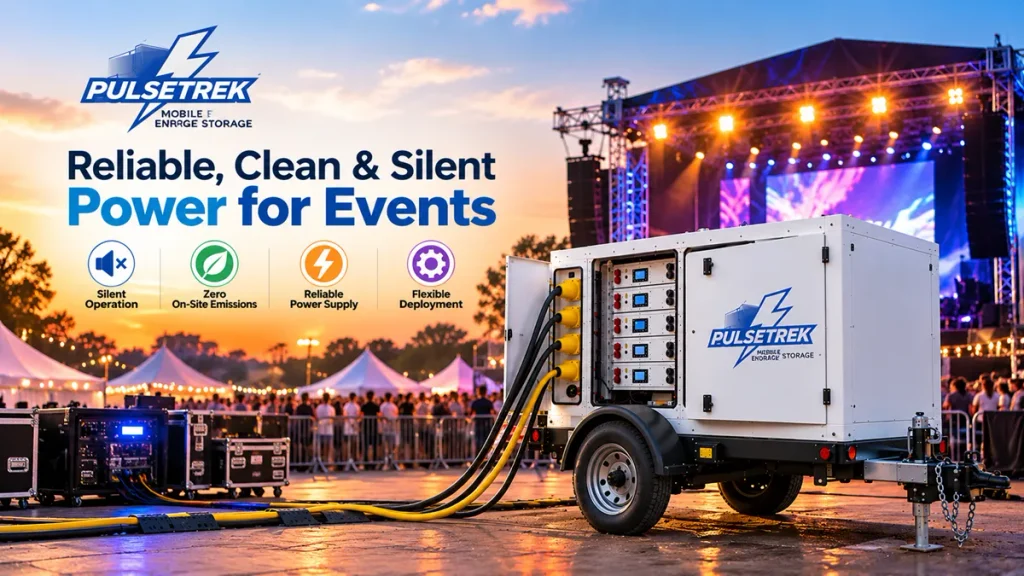
Outdoor Concerts and Music Festivals
Power for selected audio equipment, lighting systems, communication devices, and backstage operations.
Corporate Events and Exhibitions
Electricity for presentation equipment, display screens, exhibition booths, and temporary workstations.
Film and Media Production
Quiet electrical power for lighting, monitoring equipment, and suitable production infrastructure.
Temporary Commercial Installations
Power support for pop-up retail spaces, temporary offices, and short-term commercial operations.
Construction and Infrastructure Projects
Transportable energy storage can also support selected tools, site offices, and temporary electrical equipment.
PulseTrek: Mobile Battery Power from Pulsar Industries
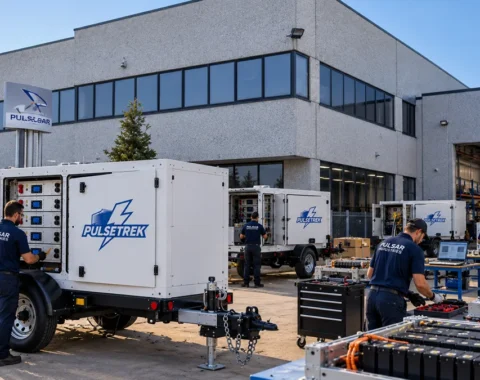
Pulsar Industries develops energy storage solutions for applications requiring reliable and flexible electricity.
PulseTrek is a mobile battery power platform designed for temporary and transportable power applications.
Mobile battery storage can help businesses evaluate alternatives to conventional generator-only power arrangements.
When selecting a solution, customers should assess required output, usable capacity, deployment conditions, and charging infrastructure.
Frequently Asked Questions
Can battery storage replace a diesel generator at an event?
Yes, for suitable loads and operating durations. Larger or longer events may require additional battery capacity, charging infrastructure, or a hybrid power arrangement.
Are battery energy storage systems silent?
Battery systems are generally quieter than diesel generators, although cooling fans and associated electrical equipment may produce some noise.
How long does a mobile battery energy storage system last?
Runtime depends on usable battery capacity and connected electrical demand.
Can battery storage power outdoor concerts?
It can support appropriately sized event loads. The system must be designed around the actual electrical requirements of the event.
Is mobile battery storage suitable for temporary installations?
Yes. Transportable battery storage is used in applications requiring flexible, temporary electricity supply, provided the installation meets electrical and site safety requirements.