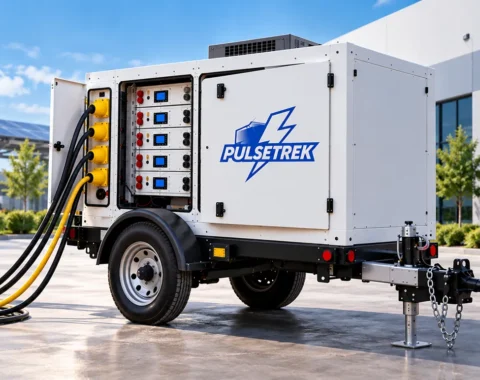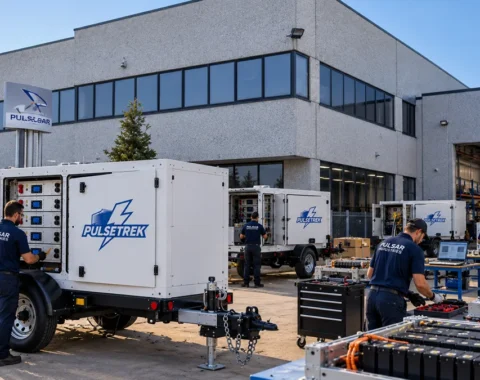
The Growing Need for Mobile EV Charging
Electric vehicles are becoming increasingly important for commercial fleets, construction companies, utility teams and field-service operations. But fleet electrification creates a practical challenge: vehicles do not always operate near permanent EV charging stations.
A work truck may spend the day at a construction site. A utility vehicle may operate in a remote service area. Temporary projects may move from one location to another before installing permanent charging infrastructure makes financial sense.
This is where mobile EV charging solutions can provide a new approach.
Instead of requiring every vehicle to travel to a fixed charger, a portable energy-storage system can bring stored electrical energy closer to the vehicle.
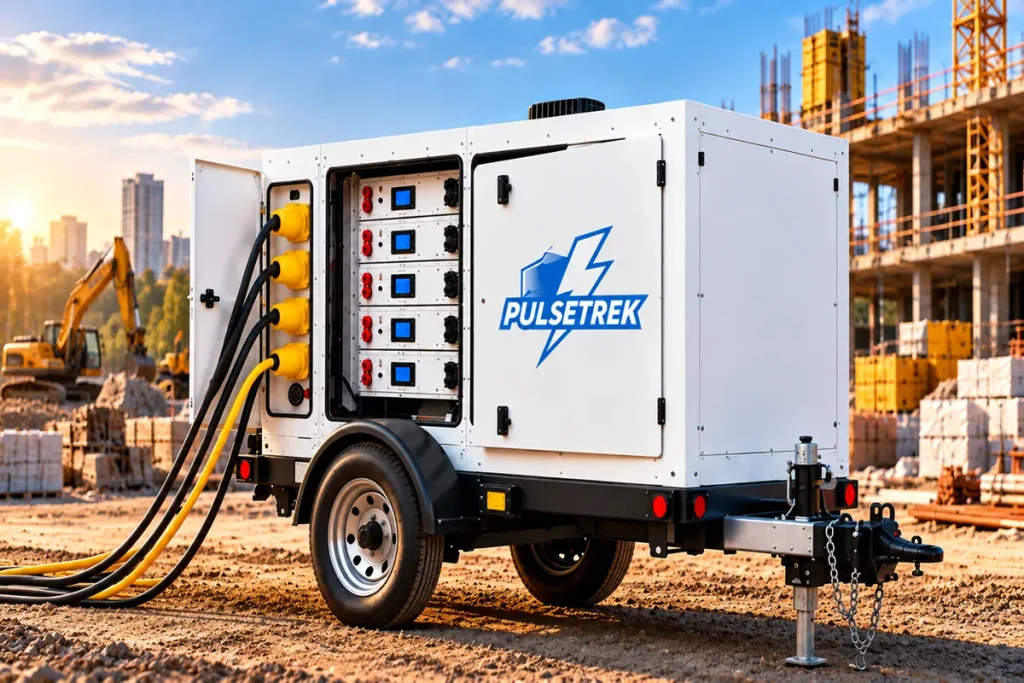
What Is a Mobile EV Charging Station?
A mobile EV charging station is a transportable charging solution designed to provide electricity to electric vehicles away from traditional fixed charging infrastructure.
Depending on the system, mobile charging may combine:
- Battery energy storage
- Power conversion equipment
- EV charging hardware
- Mobile or trailer-mounted deployment
- Grid recharging
- Solar integration
- Remote energy monitoring
The result is a flexible portable EV charging solution that can be deployed where charging is actually required.
Why Commercial Fleets Need Flexible EV Charging
Traditional EV infrastructure works well when vehicles regularly return to a permanent depot.
However, commercial operations are often more complicated.
Construction contractors, utilities, maintenance crews and field-service companies may operate across multiple locations. Installing a permanent charger at every temporary work site can be impractical.
A mobile EV charging station for commercial fleets can provide additional flexibility by allowing charging capacity to move as fleet requirements change.
This can be particularly valuable for:
Construction Sites: Electric work vehicles and equipment may need charging before permanent electrical infrastructure is available.
Utility Operations: Field teams may operate far from established charging networks.
Temporary Projects: Mobile charging can support projects that last weeks or months without requiring permanent charging infrastructure.
Fleet Depots: Portable battery storage can provide additional charging capacity when existing infrastructure reaches its limits.
Mobile EV Charging for Construction Sites
Construction is becoming increasingly electrified.
Alongside electric passenger vehicles, contractors are beginning to use electric utility vehicles, service vehicles and battery-powered equipment.
But construction sites present a unique charging challenge because electrical infrastructure changes throughout the project.
A portable EV charging station for construction sites allows energy to be transported closer to vehicles and equipment rather than depending exclusively on a permanent charging point.
This makes mobile energy storage particularly relevant during early construction phases and at temporary or remote work locations.
Battery-Powered EV Charging vs Fixed Charging Infrastructure
Fixed charging stations remain important for permanent fleet depots, workplaces and public charging networks.
Mobile charging serves a different purpose.
A battery-powered mobile charger can be relocated, deployed temporarily and used where installing permanent infrastructure may not yet be practical.
This makes the two approaches complementary rather than direct replacements.
Businesses can use permanent chargers for predictable daily charging while deploying mobile battery-powered EV charging for temporary projects, overflow demand and remote operations.
Off-Grid EV Charging Opportunities
One of the biggest challenges for fleet electrification is operating beyond established charging networks.
An off-grid EV charging solution can combine battery storage with available charging sources to provide greater flexibility.
For example:
Grid → Battery Storage → EV
or where compatible:
Solar → Battery Storage → EV
A hybrid configuration may also incorporate other charging sources depending on the site’s requirements.
This gives businesses more options for supporting electric vehicles in locations where conventional charging infrastructure is limited.
How PulseTrek Supports Mobile EV Charging
PulseTrek is particularly relevant to this application because it combines mobile LFP battery storage with EV-charging capability.
Pulsar Industries currently lists Level 1 EV charging on its Base Model+ and a 32-amp Level 2 charger on its Performance Model. The platform is trailer-mounted and can also support grid charging, optional solar expansion and hybrid operation. Pulsar Industries
Rather than designing the system only as stationary battery storage, PulseTrek allows stored electricity to move with changing operational requirements.
Why LFP Battery Technology Matters
Mobile charging equipment may experience frequent charging and discharging, making battery cycle life an important consideration.
PulseTrek uses Lithium Iron Phosphate (LFP) battery technology, with Pulsar listing a cycle life of more than 6,000 cycles for the platform. Pulsar Industries
For businesses considering portable charging infrastructure, long-cycle battery technology can help support repeated deployment across different projects and operating locations.
Mobile Charging Can Support Fleet Electrification
Fleet electrification involves more than purchasing electric vehicles.
Businesses also need to answer practical questions:
Where will vehicles charge?
How much charging power is available?
Can existing electrical infrastructure support additional chargers?
What happens when vehicles operate away from the depot?
How will temporary job sites provide charging?
Mobile EV charging and battery energy storage can become part of the answer by providing flexible charging capacity that can be deployed where operations require it.
The Future of Portable EV Charging
As commercial fleets become more electrified, charging infrastructure will also need to become more flexible.
Permanent charging stations will remain essential, but not every charging requirement happens at a permanent location.
Construction projects move. Utility crews travel. Emergency teams deploy. Temporary operations change locations.
Mobile energy storage allows charging infrastructure to move with them.